.png)
Length of a Singly Linked List
Problem Statement
Given the head pointer of a singly linked list, determine the total number of nodes present in the linked list.
You are required to return an integer representing the length of the list.
The length of a linked list is defined as the total number of nodes that can be reached by starting from the head node and following the next references until a null reference is encountered.
Before Solving: What Is a Linked List?
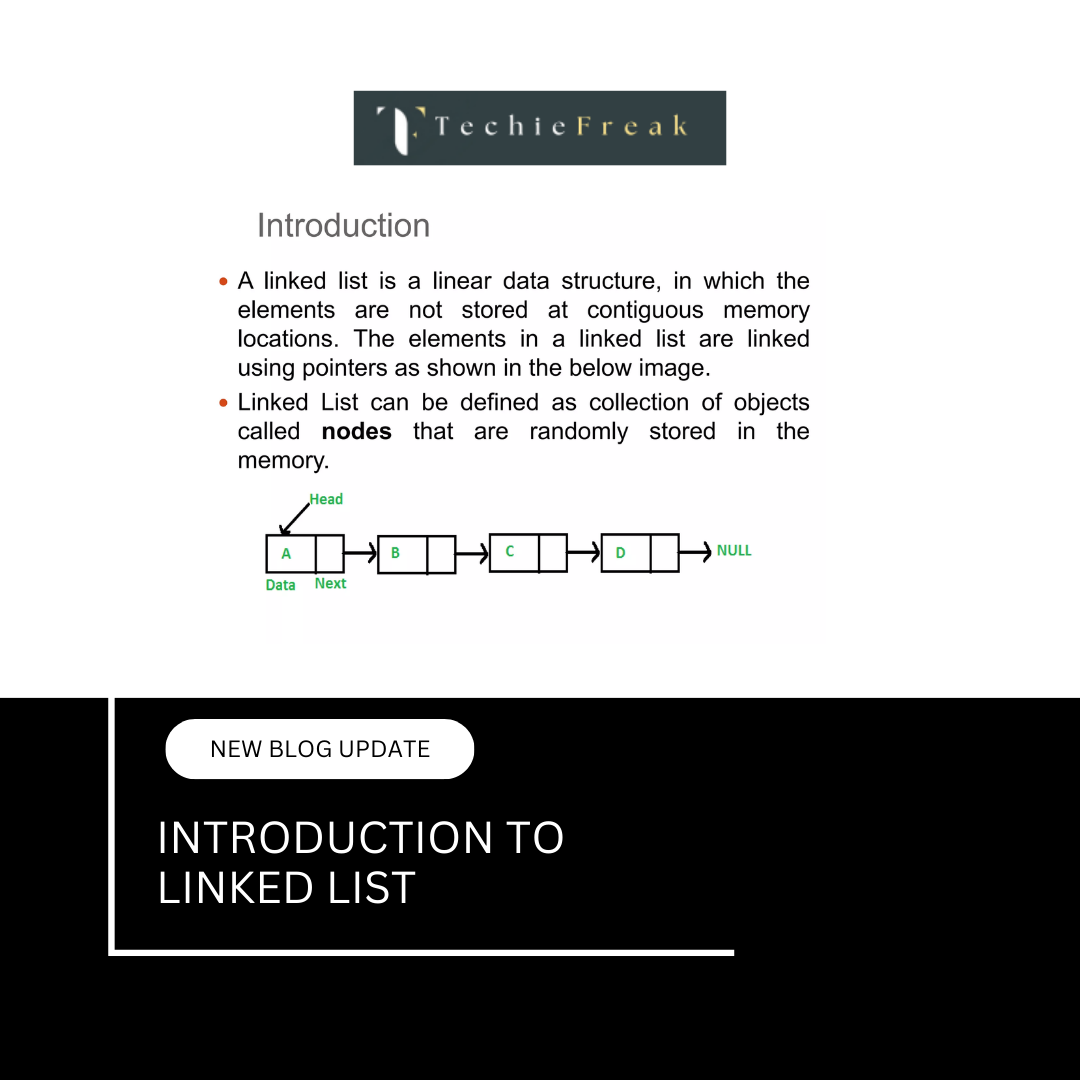
A singly linked list is a linear data structure consisting of nodes. Each node contains:
- Data — the value stored in the node.
- A reference (pointer) to the next node in the sequence.
Unlike arrays:
- Linked lists are not stored in contiguous memory.
- Each node can exist anywhere in memory.
- Traversal is sequential.
- There is no direct index-based access.
Structure of a Node:
Data | Next Pointer
Example Linked List:
Head
↓
[10 | * ] → [20 | * ] → [30 | NULL]
This list contains 3 nodes.
What Does “Length” Mean Here?
The length is simply the number of nodes in the list.
It is important to understand that:
- Length is NOT memory size.
- Length is NOT the number of bytes.
- Length is NOT the number of links.
- Length is the count of nodes.
If the list is empty:
Head = NULL
Length = 0
Observational Thinking Before Coding
Before writing code, we must think logically.
To count nodes:
- We must visit each node exactly once.
- Since there is no indexing, we must traverse sequentially.
- We need a variable that keeps track of how many nodes we have visited.
Key Insight:
Traversal is mandatory. There is no shortcut.
Types of Approaches
There are two fundamental ways to solve this:
- Iterative Approach
- Recursive Approach
APPROACH 1: ITERATIVE METHOD
Conceptual Understanding
In a singly linked list, each node contains:
- Data
- Pointer to the next node
To calculate the length:
- Start at the head.
- Visit each node.
- Count every node visited.
- Stop when you reach NULL.
Since linked lists do not support indexing, traversal is mandatory.
Algorithm (Step-by-Step)
- If head is NULL → return 0.
- Initialize counter = 0.
- Set temp = head.
- While temp != NULL:
- Increment counter
- Move temp = temp->next
- Return counter.
Time and Space Complexity
Time Complexity: O(n)
Space Complexity: O(1)
C Implementation
#include
#include

struct Node {
    int data;
    struct Node* next;
};

int lengthIterative(struct Node* head) {
    int count = 0;
    struct Node* temp = head;

    while (temp != NULL) {
        count++;
        temp = temp->next;
    }

    return count;
}

int main() {
    struct Node* head = (struct Node*)malloc(sizeof(struct Node));
    head->data = 10;

    head->next = (struct Node*)malloc(sizeof(struct Node));
    head->next->data = 20;

    head->next->next = (struct Node*)malloc(sizeof(struct Node));
    head->next->next->data = 30;

    head->next->next->next = NULL;

    printf("Length (Iterative): %d\n", lengthIterative(head));

    return 0;
}
Output
Length (Iterative): 3
C++ Implementation
#include
using namespace std;

class Node {
public:
    int data;
    Node* next;

    Node(int val) {
        data = val;
        next = NULL;
    }
};

int lengthIterative(Node* head) {
    int count = 0;
    Node* temp = head;

    while (temp != NULL) {
        count++;
        temp = temp->next;
    }

    return count;
}

int main() {
    Node* head = new Node(10);
    head->next = new Node(20);
    head->next->next = new Node(30);

    cout << "Length (Iterative): " << lengthIterative(head) << endl;

    return 0;
}
Output
Length (Iterative): 3
Java Implementation
class Node {
    int data;
    Node next;

    Node(int data) {
        this.data = data;
        this.next = null;
    }
}

public class Main {

    public static int lengthIterative(Node head) {
        int count = 0;
        Node temp = head;

        while (temp != null) {
            count++;
            temp = temp.next;
        }

        return count;
    }

    public static void main(String[] args) {
        Node head = new Node(10);
        head.next = new Node(20);
        head.next.next = new Node(30);

        System.out.println("Length (Iterative): " + lengthIterative(head));
    }
}
Output
Length (Iterative): 3
Python Implementation
class Node:
    def __init__(self, data):
        self.data = data
        self.next = None

def length_iterative(head):
    count = 0
    temp = head

    while temp is not None:
        count += 1
        temp = temp.next

    return count

# Creating linked list
head = Node(10)
head.next = Node(20)
head.next.next = Node(30)

print("Length (Iterative):", length_iterative(head))
Output
Length (Iterative): 3
APPROACH 2: RECURSIVE METHOD
Conceptual Understanding
The length of the list starting at head is:
1 + length of list starting at head->next
Until head becomes NULL.
Recursive Formula
Base Case:
If head == NULL → return 0
Recursive Case:
Return 1 + length(head->next)
Time and Space Complexity
Time Complexity: O(n)
Space Complexity: O(n) (due to recursion stack)
C Implementation
#include
#include

struct Node {
    int data;
    struct Node* next;
};

int lengthRecursive(struct Node* head) {
    if (head == NULL)
        return 0;

    return 1 + lengthRecursive(head->next);
}

int main() {
    struct Node* head = (struct Node*)malloc(sizeof(struct Node));
    head->data = 5;

    head->next = (struct Node*)malloc(sizeof(struct Node));
    head->next->data = 15;

    head->next->next = NULL;

    printf("Length (Recursive): %d\n", lengthRecursive(head));

    return 0;
}
Output
Length (Recursive): 2
C++ Implementation
#include
using namespace std;

class Node {
public:
    int data;
    Node* next;

    Node(int val) {
        data = val;
        next = NULL;
    }
};

int lengthRecursive(Node* head) {
    if (head == NULL)
        return 0;

    return 1 + lengthRecursive(head->next);
}

int main() {
    Node* head = new Node(5);
    head->next = new Node(15);

    cout << "Length (Recursive): " << lengthRecursive(head) << endl;

    return 0;
}
Output
Length (Recursive): 2
Java Implementation
class Node {
    int data;
    Node next;

    Node(int data) {
        this.data = data;
        this.next = null;
    }
}

public class Main {

    public static int lengthRecursive(Node head) {
        if (head == null)
            return 0;

        return 1 + lengthRecursive(head.next);
    }

    public static void main(String[] args) {
        Node head = new Node(5);
        head.next = new Node(15);

        System.out.println("Length (Recursive): " + lengthRecursive(head));
    }
}
Output
Length (Recursive): 2
Python Implementation
class Node:
    def __init__(self, data):
        self.data = data
        self.next = None

def length_recursive(head):
    if head is None:
        return 0

    return 1 + length_recursive(head.next)

head = Node(5)
head.next = Node(15)

print("Length (Recursive):", length_recursive(head))
Output
Length (Recursive): 2
Next problem in the series:
.png)
.png)
.png)
.png)
.png)
.png)
.png)
.png)
.png)
.png)
.png)
.png)
.png)
.png)
.png)
.png)
.png)
.png)
.png)
.png)
.png)
.png)
.png)
.png)
.png)
.jpg)
.png)
.jpg)
.jpg)
.jpg)