.png)
Sum of Elements at Odd Indices in an Array
Problem Statement
Given an array of integers, calculate the sum of elements present at odd indices.
Note:
Odd indices refer to index positions, not odd-valued elements.
Array indexing always starts from 0.
Understanding Odd Indices
In an array:
- Index 0 → even
- Index 1 → odd
- Index 2 → even
- Index 3 → odd
- Index 5, 7, 9, … → odd indices
So, we consider elements at indices:
1, 3, 5, 7, ...
Example
Input
Array: [5, 15, 25, 35, 45]
Index Mapping
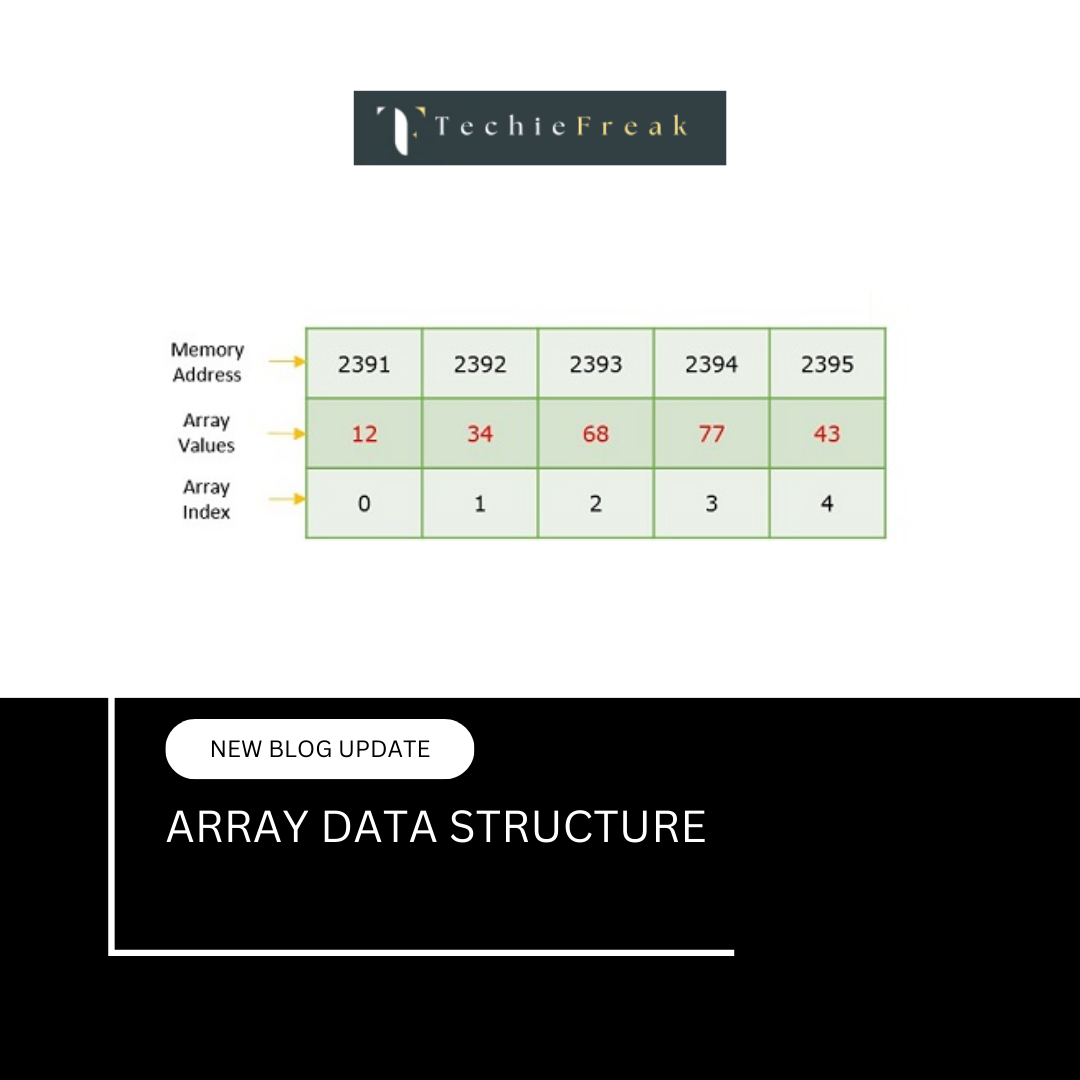
Index:    0   1   2   3   4
Element:  5  15  25  35  45
Elements at Odd Indices
Index 1 → 15
Index 3 → 35
Output
Sum = 15 + 35 = 50
Why This Problem Is Important
This problem helps in understanding:
- Index-based filtering
- Conditional checks within loops
- Difference between index and element properties
- Logical thinking for selective traversal
It also prepares you for:
- Alternate index problems
- Range-based queries
- Prefix sum optimizations
Approach / Logic
- Initialize a variable sum = 0
- Traverse the array using a loop
- Check if the index is odd (i % 2 != 0)
- Add the element at that index to sum
- Print the final sum
Step-by-Step Algorithm
- Start
- Read the array and its size
- Initialize sum = 0
- Loop from i = 0 to n - 1
- If i % 2 != 0, add arr[i] to sum
- Print sum
- End
Pseudocode
sum = 0
for i = 0 to n-1:
    if i % 2 != 0:
        sum = sum + arr[i]
print sum
Dry Run Example
Array = [2, 4, 6, 8, 10, 12]

i = 0 → even → skip
i = 1 → odd  → sum = 4
i = 2 → even → skip
i = 3 → odd  → sum = 4 + 8 = 12
i = 4 → even → skip
i = 5 → odd  → sum = 12 + 12 = 24

Final Sum = 24
Time and Space Complexity
| Metric | Value |
|---|---|
| Time Complexity | O(n) |
| Space Complexity | O(1) |
Only a single traversal is required, with no extra memory usage.
Language-wise Implementation
C Implementation
#include<stdio.h>

int main() {
    int arr[] = {5, 15, 25, 35, 45};
    int n = sizeof(arr) / sizeof(arr[0]);
    int sum = 0;

    for(int i = 0; i < n; i++) {
        if(i % 2 != 0) {
            sum += arr[i];
        }
    }

    printf("Sum of elements at odd indices: %d", sum);
    return 0;
}
Output
Sum of elements at odd indices: 50
C++ Implementation
#include<iostream>
using namespace std;

int main() {
    int arr[] = {5, 15, 25, 35, 45};
    int n = sizeof(arr) / sizeof(arr[0]);
    int sum = 0;

    for(int i = 0; i < n; i++) {
        if(i % 2 != 0) {
            sum += arr[i];
        }
    }

    cout << "Sum of elements at odd indices: " << sum;
    return 0;
}
Output
Sum of elements at odd indices: 50
Java Implementation
public class Main {
    public static void main(String[] args) {
        int[] arr = {5, 15, 25, 35, 45};
        int sum = 0;

        for(int i = 0; i < arr.length; i++) {
            if(i % 2 != 0) {
                sum += arr[i];
            }
        }

        System.out.println("Sum of elements at odd indices: " + sum);
    }
}
Output
Sum of elements at odd indices: 50
Python Implementation
arr = [5, 15, 25, 35, 45]
sum_odd_index = 0

for i in range(len(arr)):
    if i % 2 != 0:
        sum_odd_index += arr[i]

print("Sum of elements at odd indices:", sum_odd_index)
Output
Sum of elements at odd indices: 50
C# Implementation
using System;

class Program {
    static void Main() {
        int[] arr = {5, 15, 25, 35, 45};
        int sum = 0;

        for(int i = 0; i < arr.Length; i++) {
            if(i % 2 != 0) {
                sum += arr[i];
            }
        }

        Console.WriteLine("Sum of elements at odd indices: " + sum);
    }
}
Output
Sum of elements at odd indices: 50
JavaScript Implementation
let arr = [5, 15, 25, 35, 45];
let sum = 0;

for (let i = 0; i < arr.length; i++) {
    if (i % 2 !== 0) {
        sum += arr[i];
    }
}

console.log("Sum of elements at odd indices:", sum);
Output
Sum of elements at odd indices: 50
Common Mistakes to Avoid
- Confusing odd indices with odd values
- Starting indexing from 1
- Forgetting index 1
- Using unnecessary extra arrays
Interview Variations
- Compare sum of even vs odd indices
- Find maximum sum among even or odd indices
- Prefix sum of odd index elements
- Alternate index summation
Detailed Summary
The problem of summing elements at odd indices reinforces the importance of index-based operations in arrays. By focusing on position rather than value, this problem strengthens loop control, conditional logic, and array traversal fundamentals. It also builds a solid base for more advanced concepts such as range-based calculations, prefix sums, and sliding window techniques, which frequently rely on selective index processing.
.png)
.png)
.png)
.png)
.png)
.png)
.png)
.png)
.png)
.png)
.png)
.png)
.png)
.png)
.png)
.png)
.png)
.png)
.png)
.png)
.png)
.png)
.png)
.png)
.png)
.png)
.png)
.png)
.png)
.png)
.png)
.png)
.png)
.png)
.png)
.png)
.png)
.png)
.png)
.png)
.png)
.png)
.png)
.png)
.png)
.png)
.png)
.png)
.png)
.png)
.png)
.png)
.png)
.png)
.png)
.png)
.png)
.png)
.png)
.png)
.png)
.png)
.png)
.png)
.png)
.png)
.png)
.png)
.png)
.png)
.png)
.png)
.png)
.png)
.png)
.png)
.png)
.png)
.png)
.png)
.png)
.png)
.png)
.png)
.png)
.png)
.png)
.png)
.png)
.png)
.png)
.png)
.png)
.png)
.png)
.png)
.png)
.png)
.png)
.png)
.png)
.jpg)
.png)
.jpg)
.jpg)
.png)