.png)
Smallest Missing Number in Sorted Array
Problem Statement
You are given a sorted array of distinct non-negative integers.
Your task is to find the smallest missing non-negative number from the array.
Example 1
Input
arr = [0, 1, 2, 3, 5, 6]
Output
4
Example 2
Input
arr = [1, 2, 3, 4]
Output
0
Example 3
Input
arr = [0, 1, 2, 3]
Output
4
Why This Problem Is Important
- Classic binary search application
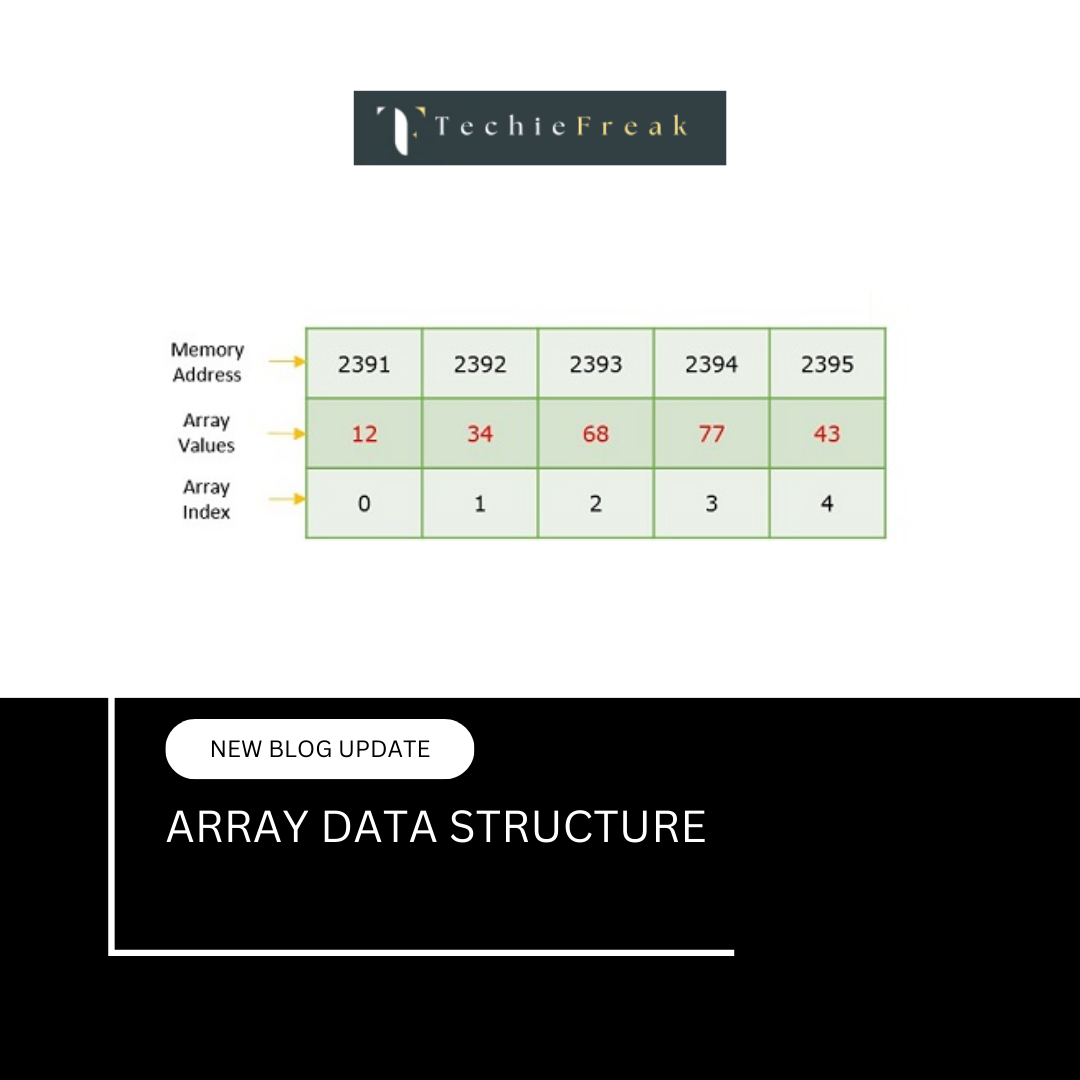
- Tests observation: arr[i] == i property
- Common in Amazon, Google, Microsoft
- Foundation for index-based searching problems
Approaches Overview
| Approach | Technique | Time | Space |
|---|---|---|---|
| 1 | Linear Scan | O(n) | O(1) |
| 2 | Binary Search | O(log n) | O(1) |
Approach 1: Linear Scan
Idea
- Traverse the array
- First index where arr[i] != i → answer
- If all match → answer = n
Time & Space
- Time: O(n)
- Space: O(1)
Python
def smallestMissing(arr):
    for i in range(len(arr)):
        if arr[i] != i:
            return i
    return len(arr)

print(smallestMissing([0,1,2,3,5,6]))
C++
#include
using namespace std;

int smallestMissing(vector& arr){
    for(int i=0;i arr = {0,1,2,3,5,6};
    cout << smallestMissing(arr);
}
Java
class Main {
    public static int smallestMissing(int[] arr){
        for(int i=0;i
JavaScript
function smallestMissing(arr){
    for(let i=0;i
C#
using System;

class Program {
    static int SmallestMissing(int[] arr){
        for(int i=0;i
Output
4
Approach 2: Binary Search (Optimal)
Key Observation
- If arr[mid] == mid → missing number is right side
- If arr[mid] > mid → missing number is left side
Time & Space
- Time: O(log n)
- Space: O(1)
Python
def smallestMissing(arr):
    low, high = 0, len(arr)-1

    while low <= high:
        mid = (low + high) // 2
        if arr[mid] == mid:
            low = mid + 1
        else:
            high = mid - 1

    return low

print(smallestMissing([0,1,2,3,5,6]))
C++
#include
using namespace std;

int smallestMissing(vector& arr){
    int low = 0, high = arr.size()-1;

    while(low <= high){
        int mid = low + (high-low)/2;
        if(arr[mid] == mid)
            low = mid + 1;
        else
            high = mid - 1;
    }
    return low;
}

int main(){
    vector arr = {0,1,2,3,5,6};
    cout << smallestMissing(arr);
}
Java
class Main {
    public static int smallestMissing(int[] arr){
        int low = 0, high = arr.length - 1;

        while(low <= high){
            int mid = low + (high-low)/2;
            if(arr[mid] == mid)
                low = mid + 1;
            else
                high = mid - 1;
        }
        return low;
    }

    public static void main(String[] args){
        int[] arr = {0,1,2,3,5,6};
        System.out.println(smallestMissing(arr));
    }
}
JavaScript
function smallestMissing(arr){
    let low = 0, high = arr.length - 1;

    while(low <= high){
        let mid = Math.floor((low + high) / 2);
        if(arr[mid] === mid)
            low = mid + 1;
        else
            high = mid - 1;
    }
    return low;
}

console.log(smallestMissing([0,1,2,3,5,6]));
C#
using System;

class Program {
    static int SmallestMissing(int[] arr){
        int low = 0, high = arr.Length - 1;

        while(low <= high){
            int mid = low + (high-low)/2;
            if(arr[mid] == mid)
                low = mid + 1;
            else
                high = mid - 1;
        }
        return low;
    }

    static void Main(){
        int[] arr = {0,1,2,3,5,6};
        Console.WriteLine(SmallestMissing(arr));
    }
}
Output
4
Final Summary
| Approach | When to Use |
|---|---|
| Linear Scan | Small arrays, quick checks |
| Binary Search | Interview-preferred, optimal |
.png)
.png)
.png)
.png)
.png)
.png)
.png)
.png)
.png)
.png)
.png)
.png)
.png)
.png)
.png)
.png)
.png)
.png)
.png)
.png)
.png)
.png)
.png)
.png)
.png)
.png)
.png)
.png)
.png)
.png)
.png)
.png)
.png)
.png)
.png)
.png)
.png)
.png)
.png)
.png)
.png)
.png)
.png)
.png)
.png)
.png)
.png)
.png)
.png)
.png)
.png)
.png)
.png)
.png)
.png)
.png)
.png)
.png)
.png)
.png)
.png)
.png)
.png)
.png)
.png)
.png)
.png)
.png)
.png)
.png)
.png)
.png)
.png)
.png)
.png)
.png)
.png)
.png)
.png)
.png)
.png)
.png)
.png)
.png)
.png)
.png)
.png)
.png)
.png)
.png)
.png)
.png)
.png)
.png)
.png)
.png)
.png)
.png)
.png)
.png)
.png)
.jpg)
.png)
.jpg)
.jpg)
.png)