.png)
Replace All Elements with Zero in an Array
Problem Statement
Given an array of elements, the task is to replace every element of the array with zero.
This means:
- The size of the array remains the same
- Only the values stored at each index are modified
- After the operation, every index contains 0
Why This Problem Is Important
Although simple, this problem helps in understanding:
- In-place modification of arrays
- Array traversal and index-based updates
- Difference between changing values vs changing structure
- Memory efficiency (no new array required)
This operation is frequently used in:
- Resetting buffers
- Initializing data structures
- Clearing previous results
- Simulation and test-case preparation
Input and Output Format
Input
Array: [5, 10, -3, 8, 12]
Output
Array after replacement: [0, 0, 0, 0, 0]
Key Concept
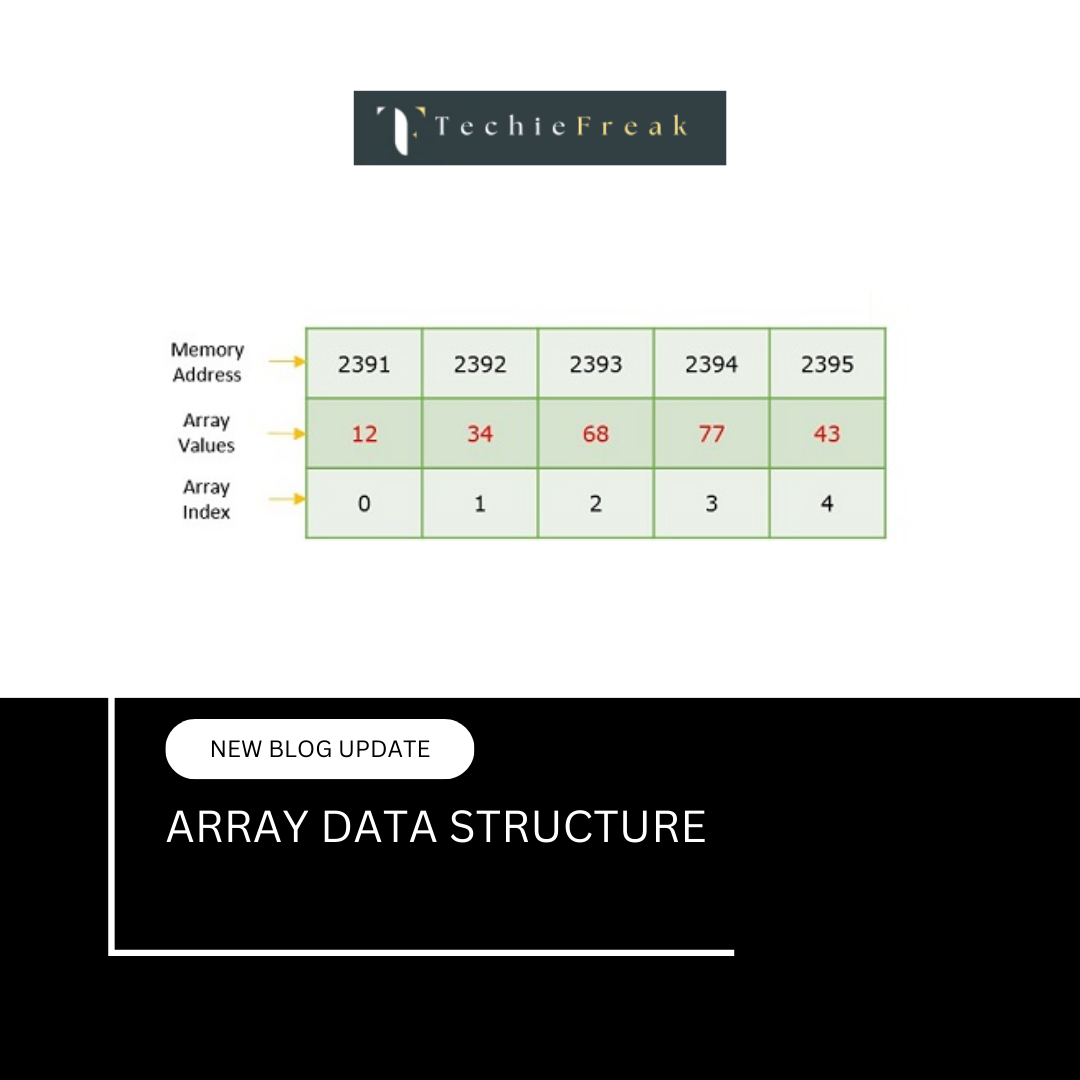
An array stores values at fixed indices.
By traversing the array and assigning 0 at each index, we overwrite existing values without changing the array size.
Step-by-Step Algorithm
- Traverse the array from index 0 to n-1
- For each index i:
- Assign array[i] = 0
- Print the updated array
Pseudocode
for i = 0 to n-1:
    array[i] = 0
Dry Run Example
Original Array: [5, 10, -3, 8, 12]

Index 0 → replace 5 with 0
Index 1 → replace 10 with 0
Index 2 → replace -3 with 0
Index 3 → replace 8 with 0
Index 4 → replace 12 with 0

Final Array: [0, 0, 0, 0, 0]
Time and Space Complexity
| Metric | Value |
|---|---|
| Time Complexity | O(n) |
| Space Complexity | O(1) |
The replacement is done in-place, so no extra memory is used.
Language-wise Implementation
C Implementation
#include

int main() {
    int arr[] = {5, 10, -3, 8, 12};
    int n = sizeof(arr) / sizeof(arr[0]);

    for(int i = 0; i < n; i++) {
        arr[i] = 0;
    }

    printf("Array after replacement: ");
    for(int i = 0; i < n; i++) {
        printf("%d ", arr[i]);
    }

    return 0;
}
Output
Array after replacement: 0 0 0 0 0
C++ Implementation
#include
using namespace std;

int main() {
    int arr[] = {5, 10, -3, 8, 12};
    int n = sizeof(arr) / sizeof(arr[0]);

    for(int i = 0; i < n; i++) {
        arr[i] = 0;
    }

    cout << "Array after replacement: ";
    for(int i = 0; i < n; i++) {
        cout << arr[i] << " ";
    }

    return 0;
}
Output
Array after replacement: 0 0 0 0 0
Java Implementation
public class Main {
    public static void main(String[] args) {
        int[] arr = {5, 10, -3, 8, 12};

        for(int i = 0; i < arr.length; i++) {
            arr[i] = 0;
        }

        System.out.print("Array after replacement: ");
        for(int num : arr) {
            System.out.print(num + " ");
        }
    }
}
Output
Array after replacement: 0 0 0 0 0
Python Implementation
arr = [5, 10, -3, 8, 12]

for i in range(len(arr)):
    arr[i] = 0

print("Array after replacement:", arr)
Output
Array after replacement: [0, 0, 0, 0, 0]
C# Implementation
using System;

class Program {
    static void Main() {
        int[] arr = {5, 10, -3, 8, 12};

        for(int i = 0; i < arr.Length; i++) {
            arr[i] = 0;
        }

        Console.Write("Array after replacement: ");
        foreach(int num in arr) {
            Console.Write(num + " ");
        }
    }
}
Output
Array after replacement: 0 0 0 0 0
JavaScript Implementation
let arr = [5, 10, -3, 8, 12];

for (let i = 0; i < arr.length; i++) {
    arr[i] = 0;
}

console.log("Array after replacement:", arr);
Output
Array after replacement: [0, 0, 0, 0, 0]
Common Mistakes
- Creating a new array unnecessarily
- Forgetting to print the updated array
- Using incorrect loop bounds
- Assuming array size changes after replacement
Interview Variations
- Replace elements with a given value k
- Replace only even or odd elements with zero
- Reset array using built-in functions
- Replace elements conditionally
Detailed Summary
Replacing all elements of an array with zero is a fundamental in-place modification problem. It emphasizes how arrays store data at fixed indices and how those values can be overwritten without altering the array’s size or structure. By performing a single traversal and updating each index directly, the operation remains memory-efficient with constant space usage. This problem forms the basis for understanding array initialization, clearing data structures, and preparing arrays for reuse in real-world programming and algorithmic scenarios.
.png)
.png)
.png)
.png)
.png)
.png)
.png)
.png)
.png)
.png)
.png)
.png)
.png)
.png)
.png)
.png)
.png)
.png)
.png)
.png)
.png)
.png)
.png)
.png)
.png)
.png)
.png)
.png)
.png)
.png)
.png)
.png)
.png)
.png)
.png)
.png)
.png)
.png)
.png)
.png)
.png)
.png)
.png)
.png)
.png)
.png)
.png)
.png)
.png)
.png)
.png)
.png)
.png)
.png)
.png)
.png)
.png)
.png)
.png)
.png)
.png)
.png)
.png)
.png)
.png)
.png)
.png)
.png)
.png)
.png)
.png)
.png)
.png)
.png)
.png)
.png)
.png)
.png)
.png)
.png)
.png)
.png)
.png)
.png)
.png)
.png)
.png)
.png)
.png)
.png)
.png)
.png)
.png)
.png)
.png)
.png)
.png)
.png)
.png)
.png)
.png)
.jpg)
.png)
.jpg)
.jpg)
.png)