.png)
Python Libraries Overview:
Python’s real power does not lie only in the language syntax. It lies in its vast ecosystem of libraries that extend its capabilities into nearly every domain of computing. From numerical analysis and data visualization to file systems, automation, networking, machine learning, web scraping, and more, Python libraries act as prebuilt toolkits that help developers accomplish complex tasks with concise, readable code.
Unlike languages that require writing everything from scratch, Python allows developers to stand on the shoulders of thousands of contributors who have already solved difficult problems. This chapter provides a high-level, educational, book-style overview of essential Python libraries, grouped by categories. Separate, deeper chapters can later explain each library individually.
Below is your extended, enriched version with more libraries and long descriptive theory.
Numerical & Scientific Computing Libraries
NumPy
NumPy provides high-performance mathematical operations, multi-dimensional arrays, broadcasting rules, and vectorized computation. It is the foundation of scientific computing in Python and is used extensively in data science, machine learning, and artificial intelligence.
Key features
- n-dimensional arrays (ndarray)
- Fast mathematical operations
- Linear algebra functions
- Broadcasting
- Memory-efficient data structures
Real-world use
- Matrix operations in ML
- Image processing
- Simulations
- Statistical modelling
SciPy
SciPy extends NumPy by providing advanced scientific computing tools.
Modules include:
- Optimization
- Signal processing
- Integration
- Sparse matrices
- Interpolation
Used in physics, engineering, and scientific research.
SymPy
A symbolic mathematics library used to solve algebra, calculus, and equation systems.
Used for:
- Symbolic differentiation
- Symbolic integration
- Algebraic simplification
- Equation solving
Data Manipulation & Analysis Libraries
Pandas
Pandas offers DataFrame and Series objects that simplify data manipulation. It helps clean, filter, reshape, merge, aggregate, and analyze data.
Use-cases:
- Data cleaning
- CSV/Excel reading
- Time-series analysis
- Business data processing
Dask
Dask enables parallel computing and handles datasets larger than memory.
Used for:
- Big data
- Lazy evaluation
- Multi-core performance
Polars
A modern alternative to Pandas built in Rust. Known for speed, parallelism, and memory efficiency.
Data Visualization Libraries
Matplotlib
The foundational Python visualization library.
Used for static, animated, and interactive graphs.
Seaborn
Built on top of Matplotlib.
Offers statistical charts with cleaner styles and easier syntax.
Plotly
An advanced library for interactive visualizations.
Used for:
- Dashboards
- Web apps
- Interactive charts
Bokeh
Another popular tool for building interactive browser-based plots.
Machine Learning & AI Libraries
Even though deep chapters will come later, here is a high-level overview.
Scikit-Learn
Traditional ML library for:
- Classification
- Regression
- Clustering
- Feature engineering
TensorFlow
A deep learning framework developed by Google.
Used for:
- Neural networks
- Computer vision
- NLP
- Large-scale training
PyTorch
Deep learning library preferred in research, built by Meta.
Keras
High-level neural network API that runs on TensorFlow.
XGBoost / LightGBM / CatBoost
Libraries for gradient boosting, widely used in competitions and production.
Web Scraping & Crawling Libraries
BeautifulSoup
Simplifies HTML and XML parsing.
Used for small to medium-sized scraping tasks.
Scrapy
A full-fledged scraping framework for large-scale crawling.
Features:
- Spider architecture
- Asynchronous requests
- Pipelines
- Auto-throttle
Selenium
Automates browsers and scrapes dynamic pages that load via JavaScript.
Use-cases:
- Interaction-based scraping
- Testing web applications
- Automating web tasks
Networking & API Libraries
Requests
The most popular HTTP library in Python.
Used for:
- Making GET, POST, PUT, DELETE requests
- Working with API endpoints
- Authentication
httpx
A modern alternative offering async support.
Flask / Django (High Level)
Not libraries but frameworks; still essential for:
- Building APIs
- Backend development
- Routing
- Database integration
Automation, OS-Level Tasks & System Interaction
OS
Used to interact with operating system functionality.
Functions include:
- Reading environment variables
- File and directory operations
- Process management
Sys
Helps access interpreter-specific variables and system-level parameters.
Used for:
- Command-line arguments
- Exiting the program
- Path management
Shutil
Used for high-level file operations like:
- Copy
- Move
- Remove
- Directory management
Subprocess
Used to run external system commands.
Example:
Running shell commands directly from Python.
Time, Date & Scheduling Libraries
Datetime
Provides tools to handle dates, times, timestamps, and timezone operations.
Use-cases:
- Logging
- Scheduling
- Time calculations
- Formatting
Time
Lower-level time library for:
- Sleep
- Performance measurement
- Unix timestamps
Schedule
Third-party library for human-readable scheduling.
File Handling & Document Libraries
CSV
Built-in library for reading and writing CSV data.
JSON
For encoding and decoding JSON data, widely used in APIs.
Pickle
Serializes Python objects for saving them into binary formats.
OpenPyXL / xlrd / xlwt
Libraries for Excel automation.
PyPDF2
Used for reading or extracting text from PDF files.
Image, Audio & Multimedia Processing Libraries
Pillow
Python Imaging Library used for:
- Image editing
- Image resizing
- Format conversion
OpenCV
Computer vision library used for:
- Face detection
- Image recognition
- Video processing
- Motion tracking
Pygame
Used for building simple games and multimedia applications.
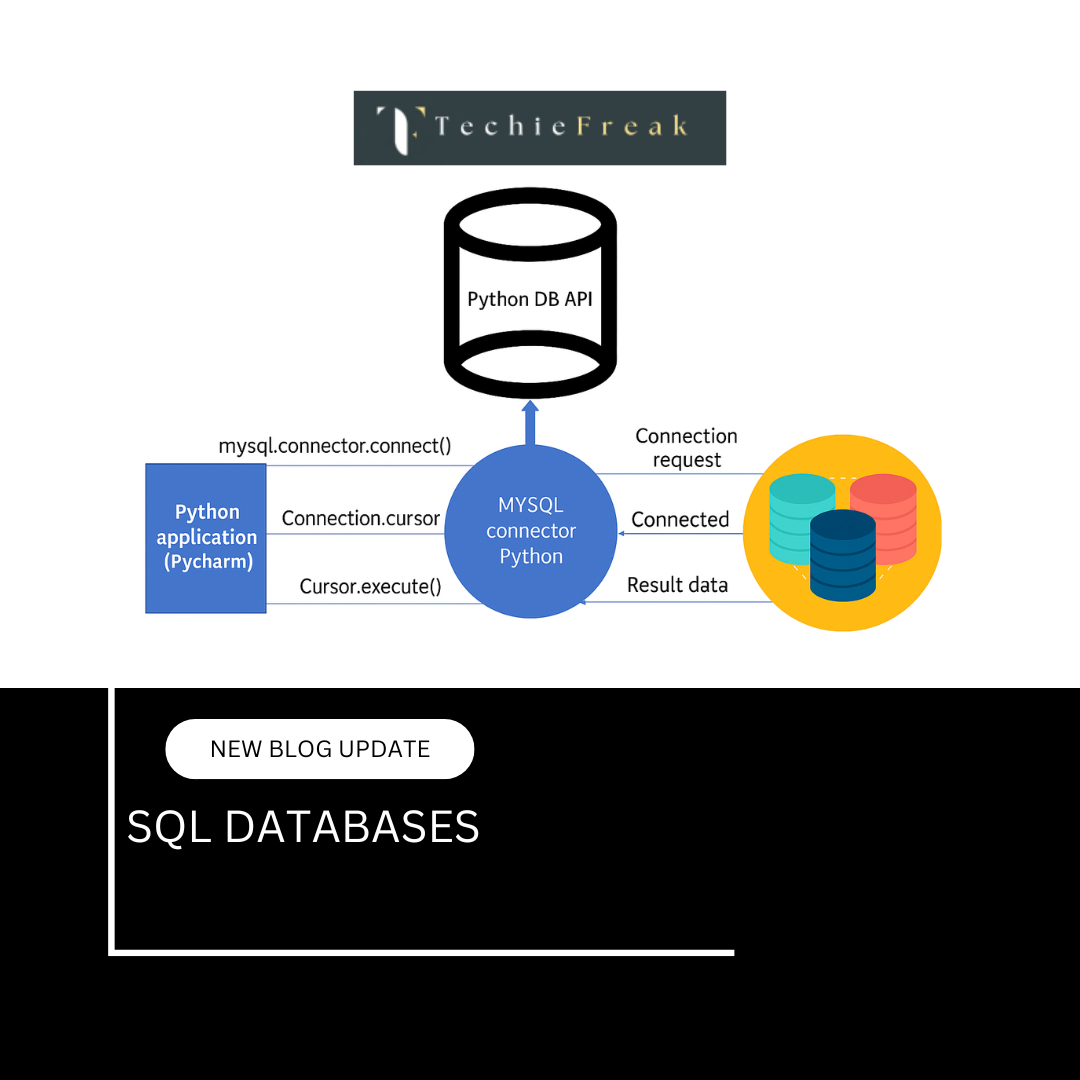
Database Libraries
SQLite3 (built-in)
Useful for lightweight local databases.
SQLAlchemy
A powerful ORM that maps Python objects to SQL tables.
PyMongo
Used to work with MongoDB.
Psycopg2
PostgreSQL connector.
Web Development Libraries
Flask
A lightweight micro-framework used to create APIs, dashboards, and lightweight web apps.
Django
A full-scale web framework with:
- ORM
- Authentication
- Admin panel
- Routing
- Migrations
FastAPI
High-speed framework for building modern APIs with type hints.
Testing Libraries
PyTest
The most popular testing framework.
Features:
- Fixtures
- Assertions
- Plugins
Unittest
The built-in testing library inspired by Java’s JUnit.
Hypothesis
Property-based testing library.
Security & Cryptography Libraries
Hashlib
Used for hashing algorithms like SHA-256, SHA-512, MD5.
Cryptography
Full-featured library for encryption, key management, security protocols.
JWT Libraries
Used for JSON Web Token authentication.
Cloud, Deployment & DevOps Libraries
Boto3
Used to interact with Amazon AWS services.
Docker SDK for Python
Used to manage Docker containers via Python scripts.
Paramiko
Used for SSH automation and remote server management.
GUI Development Libraries
Tkinter (built-in)
Used for creating desktop GUI applications.
PyQt / PySide
Feature-rich frameworks for professional-grade GUI apps.
Kivy
Used for multi-touch and mobile apps.
Automation Libraries (RPA Style)
PyAutoGUI
Automates keyboard and mouse tasks.
Selenium
Automates browsers.
Robot Framework
Used for test automation.
Advanced Libraries for Specialized Domains
Statsmodels
For statistical modeling.
NLTK / SpaCy
For Natural Language Processing.
NetworkX
Used to analyze graph structures like networks, social graphs, routing maps.
BioPython
Used for computational biology.
Astropy
For astronomy and astrophysics research.
Pytesseract
Optical character recognition (OCR).
Utility Libraries
Functools
Functional programming utilities like lru_cache, partial, reduce.
Itertools
Tools to iterate, combine, and build efficient loops.
Logging
Industry-standard logging system for Python applications.
Dataclasses
Used to create lightweight classes with minimal boilerplate.
Conclusion
Python’s library ecosystem is one of the richest in the programming world. Whether you are dealing with simple file operations, building enterprise-level web applications, implementing machine learning models, analyzing massive datasets, or automating browser actions, there is a ready-made Python library to help you do it efficiently.
This chapter gives a strong foundation for beginners and intermediate learners.
Separate, in-depth chapters can be created for each library or category later.
.png)
.png)
.png)
.png)
.png)
.png)
.png)
.png)
.png)
.png)
.png)
.png)
.png)
.png)
.png)
.png)
.png)
.png)
.png)
.png)
.png)
.png)